









Dialectical Behavior Therapy (DBT) is one of the most effective, evidence-based treatments for helping individuals regulate emotions, improve relationships, and cope with distress. Whether you’re a therapist looking to integrate DBT into your clinical work or someone seeking healthier ways to manage your emotions, understanding the four core DBT skills list is a great place to start.
In this article, we’ll break down each skill and explain how these tools build emotional resilience and support mental wellness.
What is DBT?
Dialectical Behaviour Therapy skills was developed by Dr. Marsha Linehan to treat individuals with borderline personality disorder, chronic emotion dysregulation, and self-harming behaviors. Today, DBT is used to treat a range of mental health issues, including:
- Anxiety disorders
- Depression
- PTSD
- Eating disorders
- Substance use
- Emotional dysregulation
DBT combines cognitive-behavioural strategies with mindfulness and acceptance-based techniques, teaching individuals how to live more balanced, regulated lives.
The Four Core DBT Skills for Emotional Resilience
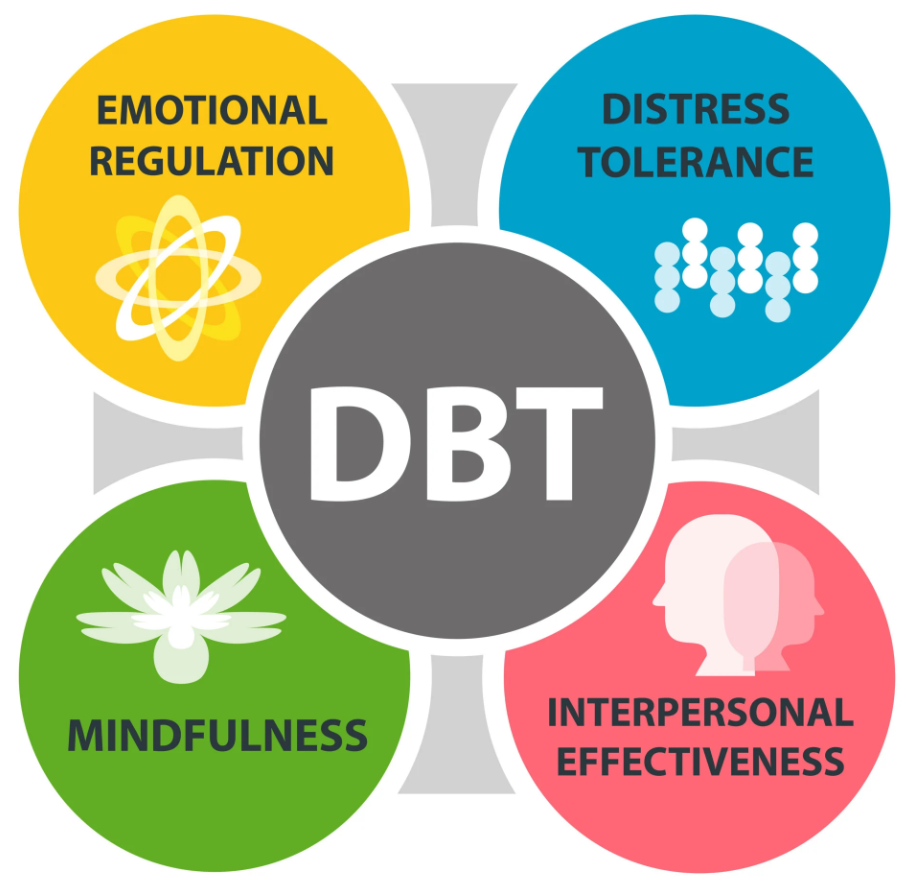
At the heart of DBT are four powerful skill modules. Let’s explore how each one helps foster emotional resilience.
1. Mindfulness: Be Present in the Moment
Mindfulness is the foundation of all DBT skills. It teaches individuals to become more aware of their thoughts, emotions, and surroundings—without judgment.
Why it matters:
- Reduces emotional reactivity
- Improves focus and clarity
- Enhances self-awareness
Practice tip: Try a “What & How” mindfulness skill—What you notice (thoughts, feelings, sensations), and How you observe it (non-judgmentally, one-mindfully, effectively).
2. Distress Tolerance: Survive Crisis Without Making It Worse
Distress Tolerance helps people get through intense emotional situations without resorting to harmful behaviors like self-harm, impulsivity, or substance use.
Why it matters:
- Increases ability to manage crisis
- Promotes safer coping mechanisms
- Encourages acceptance over avoidance
Popular strategies include:
- The TIPP skills (Temperature, Intense exercise, Paced breathing, Progressive muscle relaxation)
- Self-soothing techniques
- Distraction methods (ACCEPTS)
3. Emotion Regulation: Understand and Influence Your Emotions
Emotion Regulation involves learning how to identify emotions, understand their function, and reduce emotional vulnerability over time.
Why it matters:
- Decreases mood swings and emotional outbursts
- Builds long-term emotional strength
- Encourages healthy self-expression
Core skills include:
- Identifying emotions accurately
- Opposite action (doing the opposite of what emotion urges you to do)
- Reducing vulnerability through sleep, nutrition, exercise, and balanced living (aka “ABC PLEASE”)
4. Interpersonal Effectiveness: Build and Maintain Healthy Relationships
This skill module teaches how to communicate clearly, set boundaries, and maintain self-respect in relationships.
Why it matters:
- Improves assertiveness and boundary-setting
- Reduces conflict and miscommunication
- Encourages mutually respectful connections
Key tools include:
- DEAR MAN (for objective effectiveness)
- GIVE (for maintaining relationships)
- FAST (for self-respect effectiveness)
Why DBT Skills Matter for Emotional Resilience
Emotional resilience isn’t about avoiding stress or pain—it’s about building the ability to cope, adapt, and grow in the face of life’s challenges. DBT offers a practical, structured roadmap for doing just that.
Whether you’re a therapist supporting clients or an individual working on yourself, mastering these four core DBT skills can lead to lasting emotional growth, improved mental health, and stronger relationships.
Dialectical Behaviour Therapy provides life-changing tools for anyone navigating emotional turbulence. By practicing mindfulness, distress tolerance, emotion regulation, and interpersonal effectiveness, you can build the foundation for a more balanced and resilient life.
If you’re a clinician, consider getting DBT training to bring these powerful skills into your practice. If you’re a client or curious learner, start small—each DBT skill is a step toward emotional strength and stability.