
Key Highlights
- Children learn differently, and movement-based programmes adapt naturally to these differences.
- Children’s gym classes combine structure and flexibility to support visual, auditory, and kinaesthetic learners.
- Gymnastics for toddlers in Singapore emphasises safe exploration, repetition, and confidence-building.
- Group-based physical learning supports focus, memory, and social awareness without academic pressure.
- The right gym environment reinforces learning through action, not instruction-heavy teaching.
Children rarely sit still, and that behaviour is not a flaw. It is how learning begins. During early childhood, learning styles emerge through movement, observation, listening, and trial. Some children respond quickly to visual cues. Others absorb instructions through sound. Many process information best while moving their bodies. Children’s gym classes work because they do not force one learning method. They allow multiple styles to operate at once.
Unlike classroom settings, gym environments offer open space, defined equipment, and guided activity rather than static instruction. Children watch demonstrations, listen to short prompts, and act immediately. This constant shift suits short attention spans while reinforcing understanding through repetition. Gym-based learning does not label children by ability. It meets them where they are and allows progress to unfold naturally.
For parents exploring gymnastics for toddlers in Singapore, this adaptability matters. Programmes designed around movement align closely with how young children actually learn, not how adults expect them to behave.
Visual Learners and Structured Movement
Some children rely heavily on what they see. They follow actions before they follow words. In children’s gym classes, visual learning happens continuously. Coaches demonstrate movements instead of explaining them at length. Equipment layouts guide behaviour without verbal instruction. Coloured mats, obstacle paths, and balance markers show children where to go and what to do.
This visual clarity reduces confusion. Children gain confidence quickly when expectations appear clear. Repeating a movement they have seen builds muscle memory alongside understanding. Visual learners benefit from consistency, and gym environments provide predictable patterns while keeping sessions dynamic.
Gymnastics for toddlers in Singapore often includes short routines repeated weekly. Visual learners recognise sequences and improve faster because familiarity reduces hesitation. Progress becomes visible, which motivates participation without pressure.
Auditory Learners and Guided Instruction
Some children tune into sound more than sight. They respond to rhythm, tone, and verbal cues. In gym settings, auditory learning thrives through short, direct instructions delivered at the moment of action. Coaches use simple phrases, counting, and encouragement rather than long explanations.
Songs, clapping patterns, and call-and-response cues help children stay engaged. These auditory signals anchor attention during transitions between activities. Instead of overwhelming children with information, gym classes deliver guidance in manageable bursts.
Children’s gym classes also support language development indirectly. Listening skills sharpen as children associate words with physical actions. Auditory learners benefit from hearing feedback immediately, allowing them to adjust posture or movement in real time.
Kinaesthetic Learners and Learning Through Action
Most young children fall into this category. They learn by doing. Kinaesthetic learners struggle in static environments but thrive when movement leads instruction. Gym classes centre learning around action rather than explanation, making them ideal for this style.
Jumping, rolling, balancing, and climbing allow children to test limits safely. Mistakes become part of the learning process rather than something to avoid. Physical feedback teaches faster than verbal correction. When a child adjusts balance instinctively, learning becomes internal rather than memorised.
Gymnastics for toddlers in Singapore often focuses on exploration rather than perfection. This approach suits kinaesthetic learners who need freedom to move before refining technique. Over time, coordination improves alongside focus and self-regulation.
Social Learners and Group Dynamics
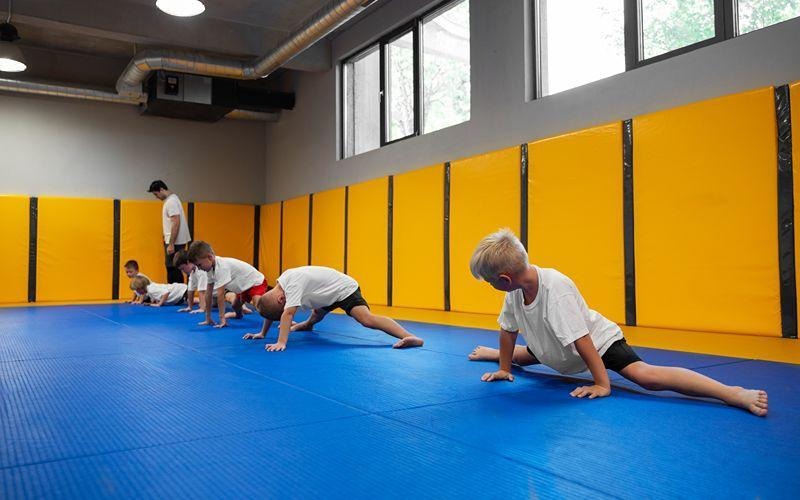
Some children learn best through interaction. Group-based gym classes create shared experiences without forcing competition. Children observe peers, take turns, and follow group rhythms. Social learning happens naturally as children mirror behaviour and adapt to shared space.
Children’s gym classes encourage cooperation through structured activities. Waiting, watching, and participating become part of the lesson. These social cues strengthen emotional awareness while keeping the environment supportive.
For younger children, seeing peers attempt movements reduces fear. Confidence builds faster when learning feels collective rather than individual.
The strength of gym programmes lies in integration. Visual, auditory, and kinaesthetic learning happens simultaneously. Children are not separated by style. They benefit from exposure to all forms, developing adaptability over time.
Contact BearyFun Gym today and discover programmes designed to match different learning styles while keeping movement fun, focused, and confidence-building.