
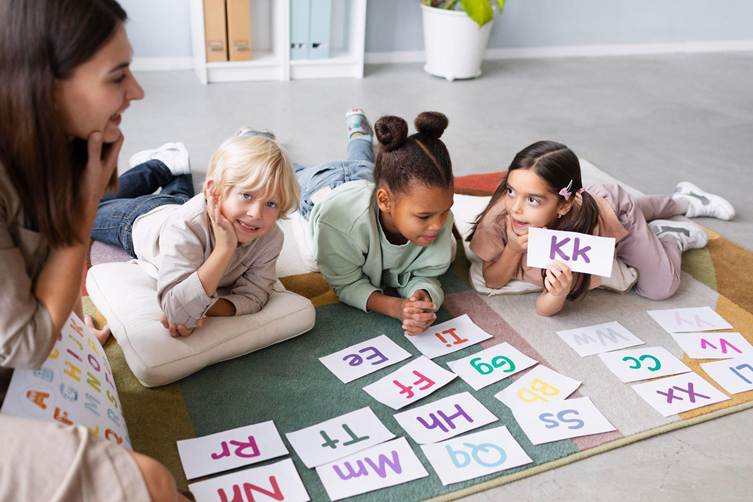
The transition from pre-school to Primary 1 in Singapore often introduces a significant academic hurdle, particularly in the Chinese language curriculum. A dedicated Chinese enrichment class serves as a vital bridge, systematically preparing young children for the formal demands of the primary school syllabus. These classes focus on building a robust linguistic foundation, ensuring children not only acquire vocabulary but also develop the necessary listening, speaking, and literacy skills required for success in the structured academic environment. Chinese for preschoolers mitigates the struggle and potential stress that can arise when formal P1 language instruction begins.
Developing Auditory and Conversational Fluency
A core function of a Chinese enrichment class is to establish strong auditory discrimination and conversational fluency, which are essential prerequisites for literacy. For many children who have minimal Mandarin exposure at home, these classes provide a crucial immersion environment. Learning through interactive games, songs, and storytelling helps children become familiar with the tonal variations and rhythm of Mandarin in a non-threatening, engaging way. This early exposure normalises the language and builds the confidence required to speak without hesitation.
Furthermore, a specialised programme for Chinese for preschoolers actively teaches essential conversational structures and vocabulary related to daily life and school contexts. This practical communication prepares them for social interactions with peers and teachers in a Chinese-speaking environment. By the time they enter primary school, children who have undergone this enrichment can comprehend basic instructions and participate actively in oral exercises, thus significantly improving their engagement and learning velocity in the classroom.
Laying the Groundwork for Literacy: Character and Pinyin
The ability to recognise and eventually write Chinese characters and master the Pinyin Romanisation system is the cornerstone of the Primary 1 curriculum. A high-quality Chinese enrichment class begins this process early, introducing foundational characters in a manageable, systematic way. This is achieved through multi-sensory learning, connecting the character’s visual form to its meaning, sound, and even physical gestures, making the learning experience memorable and fun.
Programmes designed for Chinese for preschoolers focus on character recognition first, followed by the logical introduction of Pinyin as a tool for pronunciation and input. By introducing a core set of commonly used radicals and characters, the Chinese enrichment class gives the child a significant head start. This foundational literacy reduces the initial cognitive load when the P1 curriculum expects rapid character acquisition and early reading comprehension, turning a potential struggle into a reinforced skill.
Cultivating Attention Span and Classroom Readiness
Beyond the language itself, a Chinese enrichment class prepares preschoolers for the pedagogical environment of primary school. The classes often require children to sit, focus, and transition between different structured activities, such as listening to a teacher for storytelling, then moving to a desk for written work, and finally participating in a group game. This process systematically builds the necessary attention span and discipline required for the longer, more formal P1 lessons.
The consistent, structured setting familiarises children with the expectations of an academic environment, including raising their hand, waiting their turn, and managing their own learning materials. This readiness is a vital benefit of enrolling in a specialised programme for Chinese for preschoolers. For example, Hua Language Centre structures its lessons not just around content mastery but also around building these essential classroom behaviours, ensuring a smoother overall academic transition.
How Enrichment Supports Primary 1 Success
- Vocabulary Base – Pre-acquires essential conversational and thematic vocabulary before P1 starts.
- Oral Confidence – Normalises speaking Mandarin through interactive group participation and role-play.
- Character Recognition – Introduces foundational characters and Pinyin using multi-sensory learning.
- Classroom Discipline – Develops the necessary attention span and routine for formal academic settings.
- Reduces Stress – Mitigates the initial struggle often associated with the jump in language complexity at P1.
Conclusion
A dedicated Chinese enrichment class is a strategic investment that prepares children comprehensively for the demands of primary school Mandarin. By focusing on auditory fluency, foundational literacy, and essential classroom readiness skills, a specialised programme for Chinese for preschoolers ensures the child enters P1 with confidence and a solid base for sustained academic success.
Contact Hua Language Centre today to learn more about our structured Chinese enrichment class programmes.