
Key Takeaways
- Ballet fitness does not require prior dance experience or a technical background.
- Most ballet beginner classes for adults are structured for people starting from zero.
- The benefits of adult ballet focus on strength, mobility, posture, and control—not performance.
- Progress is measured through movement quality and consistency, not speed or aesthetics.
Ballet fitness is increasingly positioned as a low-impact, technique-driven form of exercise rather than a performance-based dance discipline. The question for adults with no dance background is not whether they can “do ballet”, but whether the structure, physical demands, and learning curve are accessible. In practice, ballet fitness is designed to be inclusive, especially when delivered through ballet beginner classes for adults. The emphasis is on controlled movement, alignment, and functional strength, rather than memorising choreography or achieving stylistic perfection.
Unlike traditional ballet training, which often assumes early exposure and years of conditioning, ballet fitness programmes recognise that adult bodies come with different needs. Many participants enter with sedentary lifestyles, prior injuries, or limited flexibility. Classes are typically structured to build foundational movement patterns gradually, making prior dance experience unnecessary.
How Ballet Fitness Classes Are Structured for Absolute Beginners
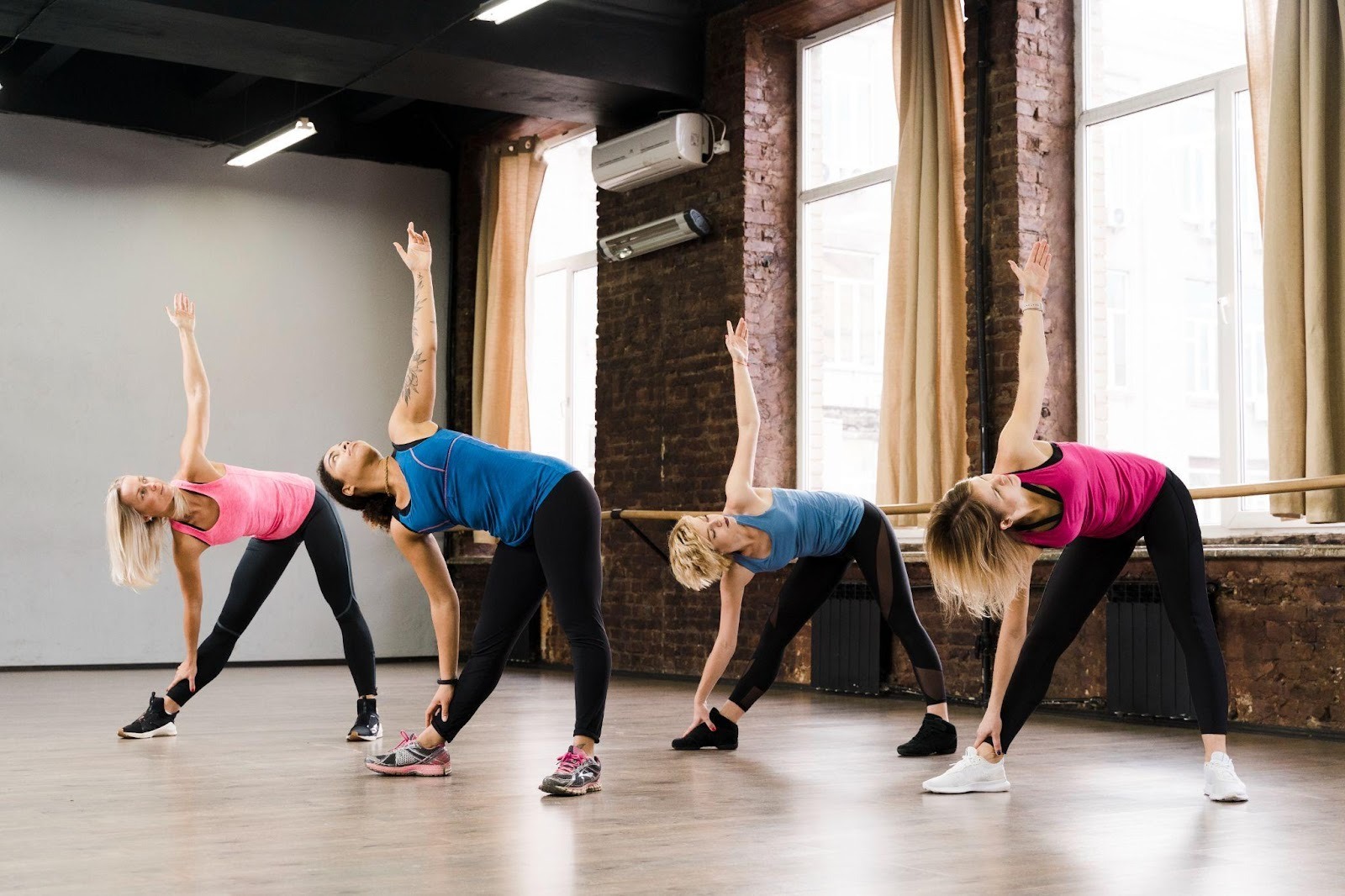
Most ballet fitness sessions follow a predictable and logical format that supports first-time participants. Classes usually begin with simple barre-based exercises or floor-supported movements that focus on posture, balance, and joint control. These early sequences are repetitive by design, allowing participants to learn without pressure.
Instructors in ballet beginner classes for adults generally prioritise clarity over speed. Movements are broken down into segments, and terminology is often explained rather than assumed knowledge. This structured repetition allows individuals with no dance background to build confidence through familiarity, not performance. Over time, the body adapts to the movement vocabulary, reducing the sense of unfamiliarity that often discourages beginners in other fitness formats.
Physical Demands Compared to Other Fitness Disciplines
Ballet fitness places less emphasis on high-impact or maximal output compared to many mainstream fitness programmes. There are no sudden jumps, heavy loads, or competitive pacing. Instead, the physical demand comes from sustained muscle engagement, controlled transitions, and precise alignment.
This approach is often more manageable for beginners than fast-paced cardio or weight-based training. Strength is developed through bodyweight resistance and isometric holds rather than external equipment. Flexibility improves gradually as a by-product of consistent movement rather than forced stretching. These characteristics make ballet fitness particularly suitable for adults starting without an athletic or dance background.
Learning Curve and Progress Expectations for Non-Dancers
Adults new to ballet fitness should expect a learning curve, but not a steep one. Early sessions may feel mentally demanding because of the coordination required, but this cognitive engagement is one of the benefits of adult ballet. Over time, movements become intuitive, and physical execution improves without conscious effort.
Progress is typically measured through improved balance, reduced muscular tension, better posture, and increased body awareness. Unlike performance-based dance training, there is no expectation to “look like a dancer”. This reframing is critical for adults who may feel self-conscious or physically limited at the start.
Psychological Barriers and How Classes Address Them
One of the biggest obstacles for adults without a dance background is perception. Ballet is often associated with rigidity, elitism, or unrealistic physical standards. Modern ballet fitness deliberately counters this by focusing on functionality rather than aesthetics.
Instructors in adult-focused classes tend to create environments that normalise learning at different paces. Corrections are practical rather than judgmental, and personal progress is prioritised over comparison. This approach reduces anxiety and makes long-term participation more likely.
Practical Benefits for Adults Starting From Zero
The benefits of adult ballet extend beyond physical conditioning. Improved posture, joint stability, and muscular balance often translate into better movement efficiency in daily life. Ballet fitness offers a structured yet forgiving entry point, particularly for office-based adults or those returning to exercise after long breaks.
Since the movements are controlled and low-impact, injury risk is generally lower compared to more aggressive training formats. This characteristic makes ballet fitness a sustainable option rather than a short-term fitness trend.
Final Perspective
Ballet fitness is not only suitable for people with no dance background; it is often designed specifically for them. Once delivered through well-structured ballet beginner classes for adults, the format prioritises accessibility, progression, and functional outcomes. The benefits of adult ballet are realised through consistency and engagement, not prior skill. Ballet fitness remains a practical and realistic choice for adults seeking a disciplined yet adaptable form of movement.
Contact BalletBody to start with a beginner-friendly class designed for adults—no background required, just consistency and openness to learn.